
Meet the Founder

International Space Law and Space Laws of the United States: a Space Law Textbook
International Space Law and Space Laws of the United States provides helpful practice tips for representing clients and doing business in today's commercial space industry, as well as important coverage of the essentials of Space Law. Each chapter explores a nuanced space law issue and concludes with review questions. Co-authored by Steve Mirmina, this book is valuable for students of Space Law as well as practitioners.
Elgar Encyclopedia of Space Policy and Governance (contributed one chapter)
This Encyclopedia explores the dynamic fields of space policy and governance. Authored by over 50 scholars and practitioners from across the globe, it delves into the key concepts, governing bodies, and challenges involved in regulating the space sector. Mirmina authored chapter three on the Artemis Accords.
Reducing the Proliferation of Orbital Debris: Alternatives to a Legally Binding Instrument
Steve Mirmina examines the growing space-debris problem and argues that practical, non-binding international approaches (like coordinated standards and best-practice guidelines) may reduce debris more effectively than trying to negotiate a new binding treaty.
Elgar Encyclopedia of Space Law (contributed one chapter)
Providing a comprehensive and timely overview of the evolving landscape of space law, this Encyclopedia emphasizes the importance of international collaboration in maintaining outer space as a peaceful domain.
The following are verbatim (and anonymous) quotes from students:
· Prof. Mirmina was absolutely fantastic.
· Prof. Mirmina was phenomenal. I had a passing interest in space law when I signed up, but now I think I have a new potential career path.
· The professor is an incredibly pleasant and approachable individual, and he made every student feel welcome and valued in the class. He had excellent command of the subject matter, and his enthusiasm encouraged broad student participation and made even potentially difficult or dry subjects fascinating.
· It was an incredibly enjoyable class.
· Professor Mirmina is a phenomenal teacher; I feel lucky to have been in his class. He not only has a mastery of the subject matter of space law, he has a clear passion for the subject and for the field.
· Professor Mirmina is quite effective at conveying the subject matter.
· I just need to emphasize again what a joy it was to have Professor Mirmina as a teacher.
The Time is Always Right to do What is Right
In the Foreword to the Georgetown Journal of International Law, Steve Mirmina provides some examples illustrating the differences between doing what is legal in space exploration versus doing what is right.

Steve Mirmina
Before founding Planetary Solutions, PLLC, Steve Mirmina practiced International Space Law for more than 25 years in the NASA Office of the General Counsel. Before joining NASA, he worked for several years as an Associate at two well respected DC law firms practicing Aviation Law.
Steve has been teaching Space Law at Georgetown University Law Center in Washington, DC since 2011. He has also taught Space Law at the University of Connecticut School of Law, Vanderbilt Law School, and has been a Visiting Faculty Member at Yale Law School on three different occasions.
Most notably, Steve’s textbook on Space Law (co-author) is used at law schools across the country and internationally. Steve’s primary area of legal scholarship involves preserving the environment of outer space for the use of future generations. He has spoken and written extensively on the subject, and he has published more than a dozen peer reviewed articles, including in the American Journal of International Law, the Chicago Journal of International Law, as well as various publications of the American Bar Association, Harvard Law Review, and Journal of Air Law and Commerce.
Steve Mirmina received his first LL.M. degree with honors from Leiden University Faculty of Law in the Netherlands, and his second LL.M. with honors from Georgetown Law. He received his J.D. with honors from the University of Connecticut. Outside of work, Steve enjoys Argentine Tango dancing and scuba diving (but not at the same time).
Select Publications
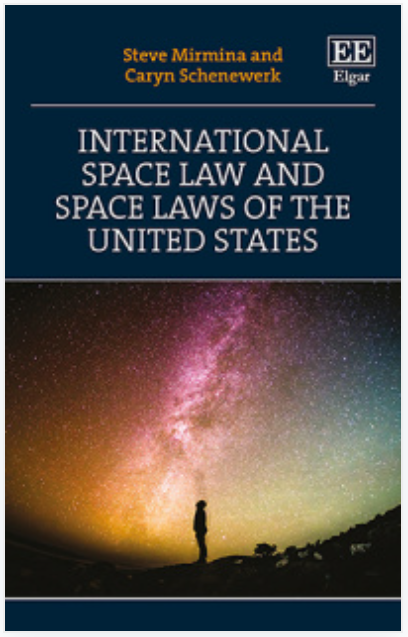
International Space Law and Space Laws of the United States: a Space Law Textbook
International Space Law and Space Laws of the United States provides helpful practice tips for representing clients and doing business in today's commercial space industry, as well as important coverage of the essentials of Space Law. Each chapter explores a nuanced space law issue and concludes with review questions. Co-authored by Steve Mirmina, this book is valuable for students of Space Law as well as practitioners.
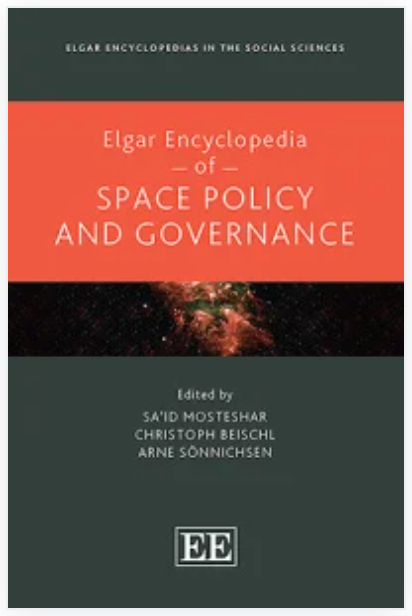
Elgar Encyclopedia of Space Policy and Governance (contributed one chapter)
This Encyclopedia explores the dynamic fields of space policy and governance. Authored by over 50 scholars and practitioners from across the globe, it delves into the key concepts, governing bodies, and challenges involved in regulating the space sector. Mirmina authored chapter three on the Artemis Accords.
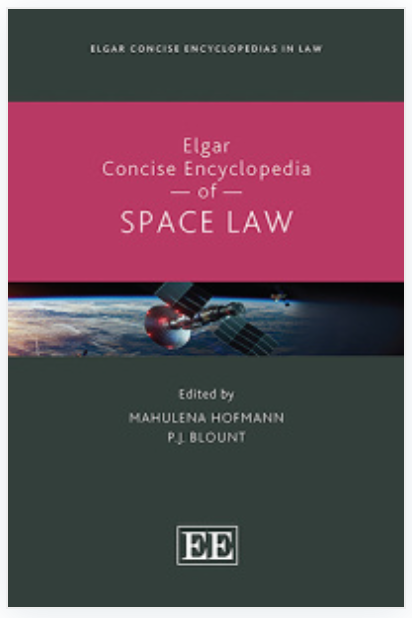
Elgar Encyclopedia of Space Law (contributed one chapter)
Providing a comprehensive and timely overview of the evolving landscape of space law, this Encyclopedia emphasizes the importance of international collaboration in maintaining outer space as a peaceful domain.
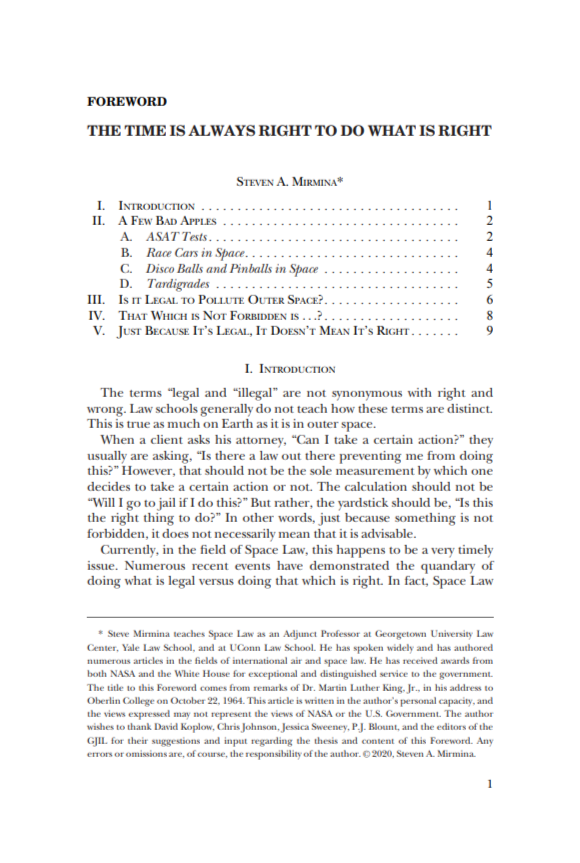
The Time is Always Right to do What is Right
In the Foreword to the Georgetown Journal of International Law (Spring 2020), Steve Mirmina provides some examples illustrating the differences between doing what is legal in space exploration versus doing what is right.

Elon Musk’s ‘Starman’: Is it Really Legal for Billionaires to Launch Their Roadsters into Space?
In the Harvard Law Review, Steve Mirmina uses SpaceX’s Tesla Roadster launch to explore how international space law—especially the Outer Space Treaty’s “due regard” and “harmful contamination” principles—applies to flashy private missions and where the line might be between what’s legal and what’s responsible.
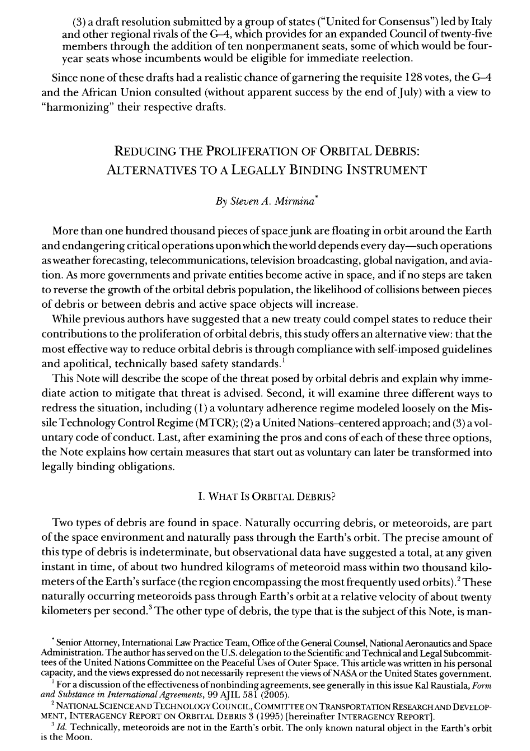
Reducing the Proliferation of Orbital Debris: Alternatives to a Legally Binding Instrument
Steve Mirmina examines the growing space-debris problem and argues that practical, non-binding international approaches (like coordinated standards and best-practice guidelines) may reduce debris more effectively than trying to negotiate a new binding treaty.
Testimonials from Steve’s Students




Reducing the Proliferation of Orbital Debris: Alternatives to a Legally Binding Instrument
Steve Mirmina examines the growing space-debris problem and argues that practical, non-binding international approaches (like coordinated standards and best-practice guidelines) may reduce debris more effectively than trying to negotiate a new binding treaty.
Elon Musk’s ‘Starman’: Is it Really Legal for Billionaires to Launch Their Roadsters into Space?
In the Harvard Law Review, Steve Mirmina uses SpaceX’s Tesla Roadster launch to explore how international space law—especially the Outer Space Treaty’s “due regard” and “harmful contamination” principles—applies to flashy private missions and where the line might be between what’s legal and what’s responsible.